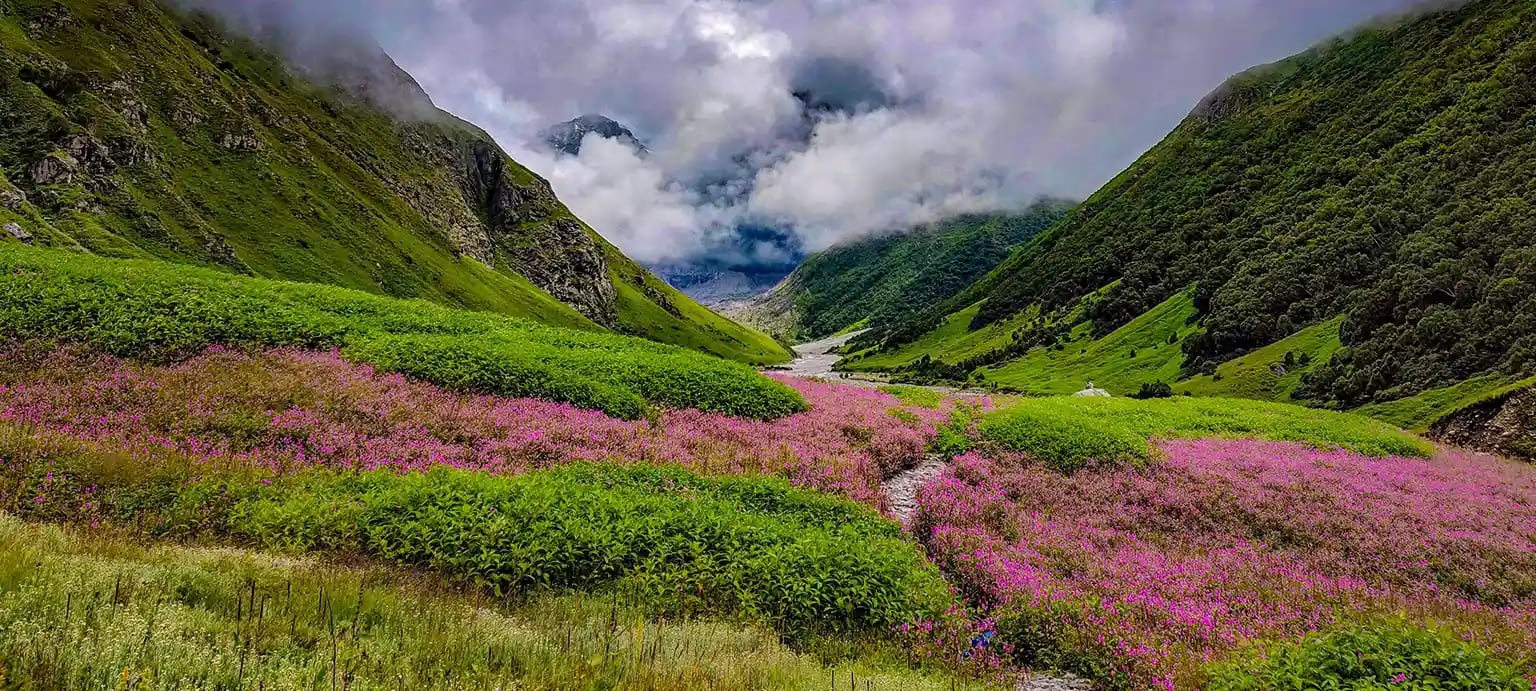
The Valley of Flowers is a high-altitude Himalayan valley nestled in the Nanda Devi Biosphere Reserve. Unlike most treks that peak in autumn, this trail demands to be walked during the heavy monsoon months, when the 87.5 sq km valley floor erupts into a spectacular tapestry of endemic flora. From Blue Poppies to Cobra Lilies, this trek is an absolute pilgrimage for nature lovers, botanists, and photographers.
The Blooming Window: When to Go
The Valley is officially open from June 1st to October 31st every year. However, if you want to see the valley living up to its name, timing is everything.
🌱 June (Early Season)
Melting glaciers, plenty of snow on the trail, but very few flowers. Great for snow trekking, bad for botanists.
🌸 Mid-July to Mid-Aug (Peak)
The absolute best time. Maximum density of blooming flowers. Expect heavy monsoon rains and lush green landscapes.
🍂 September (Late Season)
Clear skies, brilliant mountain views, receding rains. However, the flowers have mostly turned to seeds.
The Classic 6-Day Itinerary
Starting from Rishikesh or Haridwar, the journey into the valley requires a combination of long mountain drives and moderate trekking.
Drive: Rishikesh to Govindghat / Pandukeshwar
A 10-11 hour drive (270 km) along the Alaknanda River. You will cross all five holy confluences (Panch Prayag). Rest overnight at Govindghat (1,920 m).
Trek: Govindghat to Ghangaria
Take a shared taxi for the first 4 km to Poolna village. From Poolna, begin your 9 km trek along the Pushpawati River. Arrive at Ghangaria (3,050 m), your base camp for the next three nights.
Trek: The Valley of Flowers
Trek 4 km into the official UNESCO valley. The trail is mostly flat once you enter. Spend 3-4 hours exploring the flowers, Legge's grave, and the glacial streams. Return to Ghangaria by 5:00 PM.
Trek: Hemkund Sahib (Optional but Recommended)
A steep 6 km climb to the glacial lake and sacred Sikh shrine at 4,329 m. It is physically demanding and tests your altitude acclimatization. Return to Ghangaria.
Descent & Departure
Day 5: Trek 9 km down to Poolna, taxi to Govindghat. Day 6: Drive 270 km back to Rishikesh/Dehradun, concluding the trip.
Difficulty, Permits & Rules
How Hard is the Trek?
The trek to Valley of Flowers is graded as Moderate. The path to Ghangaria is well-paved (stone steps) but gains 1,100 m in altitude. The 4 km stretch into the valley is relatively easy. However, the steep 6 km climb to Hemkund Sahib is physically taxing due to the altitude (4,329 m). Beginners with good fitness can complete this trek.
| Rule / Permit Info | Details for 2026 |
|---|---|
| Entry Fees | Indians: ₹200 (Valid 3 days) | Foreign Nationals: ₹800 |
| Timings | Entry: 7:00 AM to 12:00 PM. Everyone must exit by 5:00 PM. |
| Accommodation in Valley | Strictly prohibited. No camping allowed inside the biosphere reserve. Base camp is always Ghangaria. |
| Mules & Helicopters | Mules and porters go up to Ghangaria and Hemkund. No mules are allowed inside the Valley of Flowers trail. Helicopter service available from Govindghat to Ghangaria. |
What to Pack (Monsoon Edition)
Since the best time to visit coincides with peak monsoon, keeping your gear dry is your biggest challenge.
-
🥾
Waterproof Trekking Shoes: Absolute necessity. The stone paths get extremely slippery.
-
🧥
High-Quality Poncho: Umbrellas are useless in the wind. Bring a poncho that covers you and your backpack.
-
🥶
Fleece & Thermals: It gets freezing at Ghangaria at night, especially after getting soaked in the rain.
-
🎒
Dry Bags/Polythene: Wrap all your clothes and electronics in plastic bags before putting them in your rucksack.